What Happens To A Plant Cell In A Hypotonic Solution. The greatest concentration of water is outside the cell. The cell membrane pulls away from the cell wall but remains attached at points called plasmodesmata.
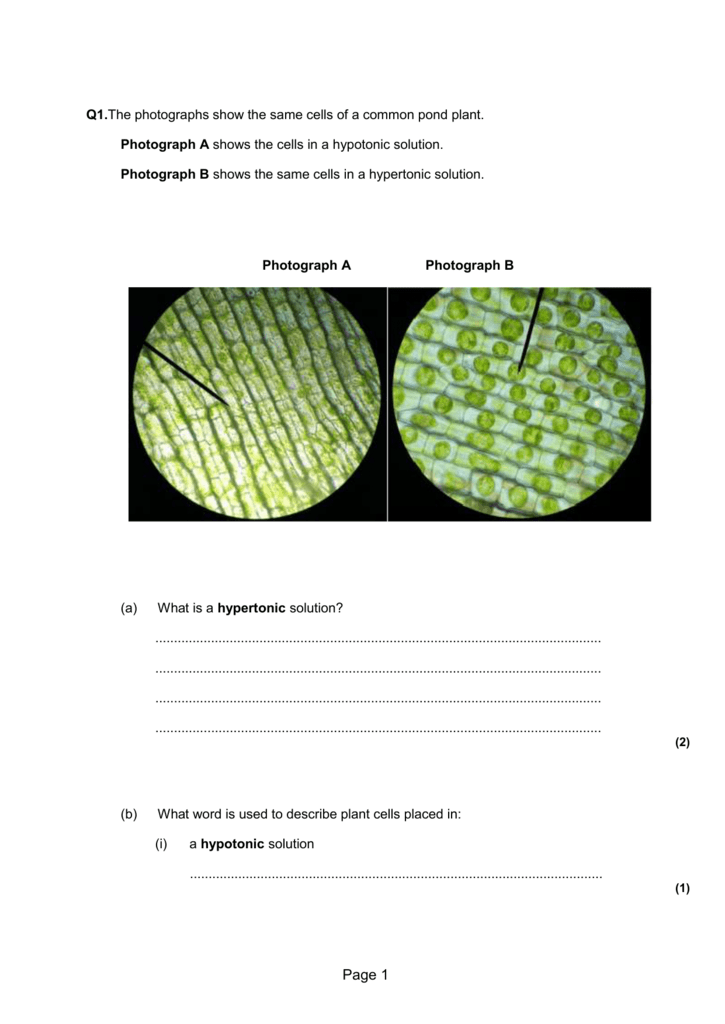
Water enters the cell causing it to get turgid. If you place an animal or a plant cell in a hypertonic solution, the cell shrinks, because it loses water ( water moves from a higher concentration inside the cell to a lower concentration outside ). When placed in a hypertonic solution, a cell without a cell wall will lose water to the environment, shrivel, and.
What Happens If A Plant Cell Is Placed In A Hypertonic Solution?
Water moves from external environment to the cell and thus, the cells start to swell, however, rigid cell walls prevent it from bursting and therefore it remains intact and cells become turgid (that is. So, the correct answer is option a. After boiling the cell would have lost its water (dehydrated).it appears like a deflated baloon.now it needs water to regain its original form or swell.when it is placed in hypotonic med.
A Solution Which Has A Lower Osmotic Concentration (High Water Potential) Than Another Solution Is Said To Be Hypotonic.
When the plant cell is placed in a hypotonic solution, it takes up water by osmosis and starts to swell, but the cell wall prevents it from bursting. Plant cells have a cell wall around the outside than stops them from bursting, so a plant cell will swell up in a hypotonic solution, but will not burst. A solution will be hypertonic to a cell if its solute concentration is higher.
Therefore, Water Enters The Cell And Fills The Central Vacuole, Causing The Contents Of The Plant Cell To Press Against The Cell Wall.
What happens to plant and animal cells in hypertonic hypotonic and isotonic solutions? Th
e difference between a hypotonic solution and a hypertonic solution is tabulated below: What happens when you place a plant cell in a hypertonic solution?
Examples Of Hypotonic Solution Plants And Fungi.
In an isotonic environment, there is no net water movement, so there is no change in the size of the cell. A single animal cell ( like a red blood cell) placed in a hypotonic solution will fill up with water and then burst. A plant cell behaves differently from an animal cell when placed in a hypotonic solution.
The Cell Membrane Pulls Away From The Cell Wall But Remains Attached At Points Called Plasmodesmata.
When placed in a hypertonic solution, a cell without a cell wall will lose water to the environment, shrivel, and. So if you get thirsty at the beach drinking seawater makes you even more dehydrated. Water enters the cell causing it to get turgid.