Three Differences Between Plant And Animal Cells. Plant cells are composed of chloroplast to produce their own food. Although both animal and plant cells bear similarities, there are differences between plant and animal cells by from shape, size, organelles & functions.
3 Differences Between Plants And Animals Cells Aja Pictures from ajapictures.blogspot.com
As plants and animals are eukaryotic, so they have almost similar cellular structure, but few organelles like chloroplast, plasmodesmata, cell wall, plastids, etc. The most important structures of plant and animal cells are shown in the diagrams below, which provide a clear illustration of how much these cells have in common. Are only found in the plant cell, while in there is no cell wall in the animal cell;
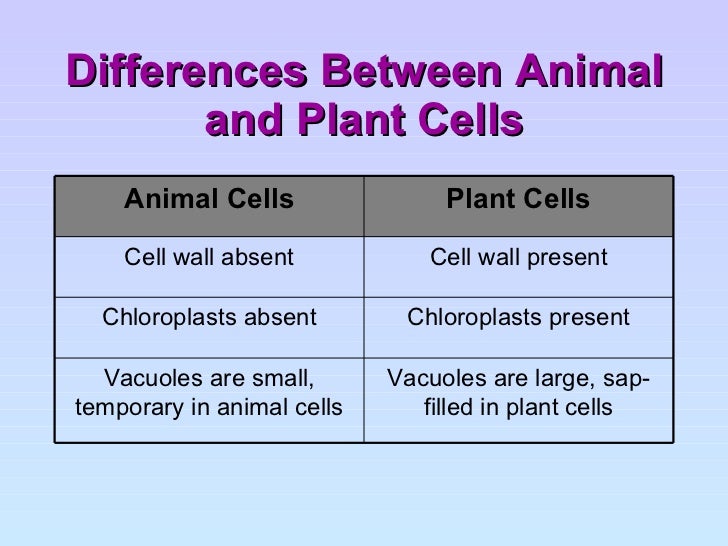
The First Difference Is A Structure Known As\ഠChloroplasts, Which Plant Cells Have And Animal Cells Do Not.
Centrioles are present in lower forms of plants. Despite many similarities, plant and animal cells differ in a few different ways. Hence, animal cells are heterotrophs.
The plants form a cell plate, instead, where a new cell wall develops. The cells of plants have a cell wall. Some organisms are unicellular while some are multicellular.
Animal Cells Do Not Contain Cell Walls As One Of The Organelles, But They Do Have A Plasma Membrane Which Is The Same As In Plants.
The difference between plant cell and animal cell are listed below: Plant
cells have chloroplasts, but animal cells do not. Animal cells become round in shape.
As Plants And Animals Are Eukaryotic, So They Have Almost Similar Cellular Structure, But Few Organelles Like Chloroplast, Plasmodesmata, Cell Wall, Plastids, Etc.
Instead they have cilia, the tight junction for other functionality. Plant and animal cells are both eukaryotic cells, so they have several features in common, such as the presence of a cell membrane, and cell organelles, like the nucleus, mitochondria and endoplasmic reticulum. Plant cells feel firm or rigid.
Are Only Found In The Plant Cell, While In There Is No Cell Wall In The Animal Cell;
One example of this is that plant cells have chloroplasts that allow them to perform photosynthesis for energy, but animal cells do not have chloroplasts since they get their energy elsewhere. Plant cells have a rectangular shape and are larger. Chloroplasts are what give plants their green color.